
)
In the demanding landscape of entrepreneurship, the path to building a thriving business often appears daunting and fraught with risk. However, a pragmatic methodology known as the 'stair-stepping method' offers a more measured and robust approach. Championed by seasoned entrepreneurs like Rob Walling, this strategy redefines the journey of business creation, advocating for a series of progressively more significant ventures rather than a single, high-stakes leap. It's an incremental ascent, where each successfully executed step provides the capital, knowledge, and confidence for the next.

At its core, the stair-stepping method begins with a foundational, often simpler business that generates predictable revenue with relatively low risk. This could be a small service business, a content site with affiliate income, or a niche product. The primary objective of this initial venture isn't to achieve massive scale or groundbreaking innovation, but rather to serve as a cash-flow engine. The profits from this first step are then reinvested, not into scaling the initial business indefinitely, but into funding a slightly larger, more complex, or more ambitious second venture. This iterative process allows founders to mitigate financial exposure, acquire essential skills, and build a track record of success.
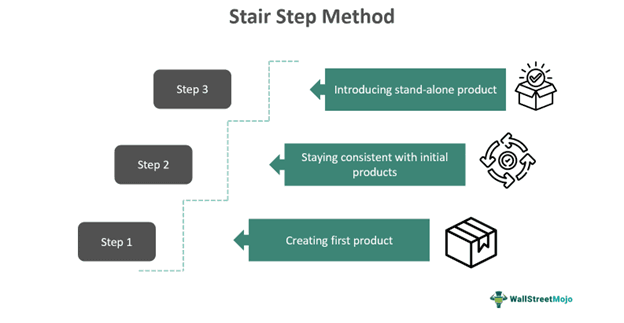
Strategic Momentum: Building Your Entrepreneurial Ladder
What sets the stair-stepping method apart is its emphasis on sustainable momentum and de-risking. Instead of seeking external investment prematurely or taking on substantial debt, entrepreneurs bootstrap their way up. Each 'step' on the ladder acts as both a learning laboratory and a financial reservoir. For instance, the experience gained from managing customers, marketing, and operations in a simpler business provides invaluable lessons that directly apply to a more intricate project, such as a Software-as-a-Service (SaaS) product. This organic growth model fosters resilience and adaptability, crucial attributes for long-term entrepreneurial success.

The beauty of this method lies in its accessibility and practicality. It encourages aspiring founders to start with what they can reliably execute, proving their capabilities and accumulating resources along the way. By systematically building a portfolio of ventures, each one leveraging the successes of its predecessor, entrepreneurs can significantly reduce the inherent volatility of launching new businesses. It's a testament to the power of calculated progression, demonstrating that significant achievements are often the sum of well-executed, smaller steps.