
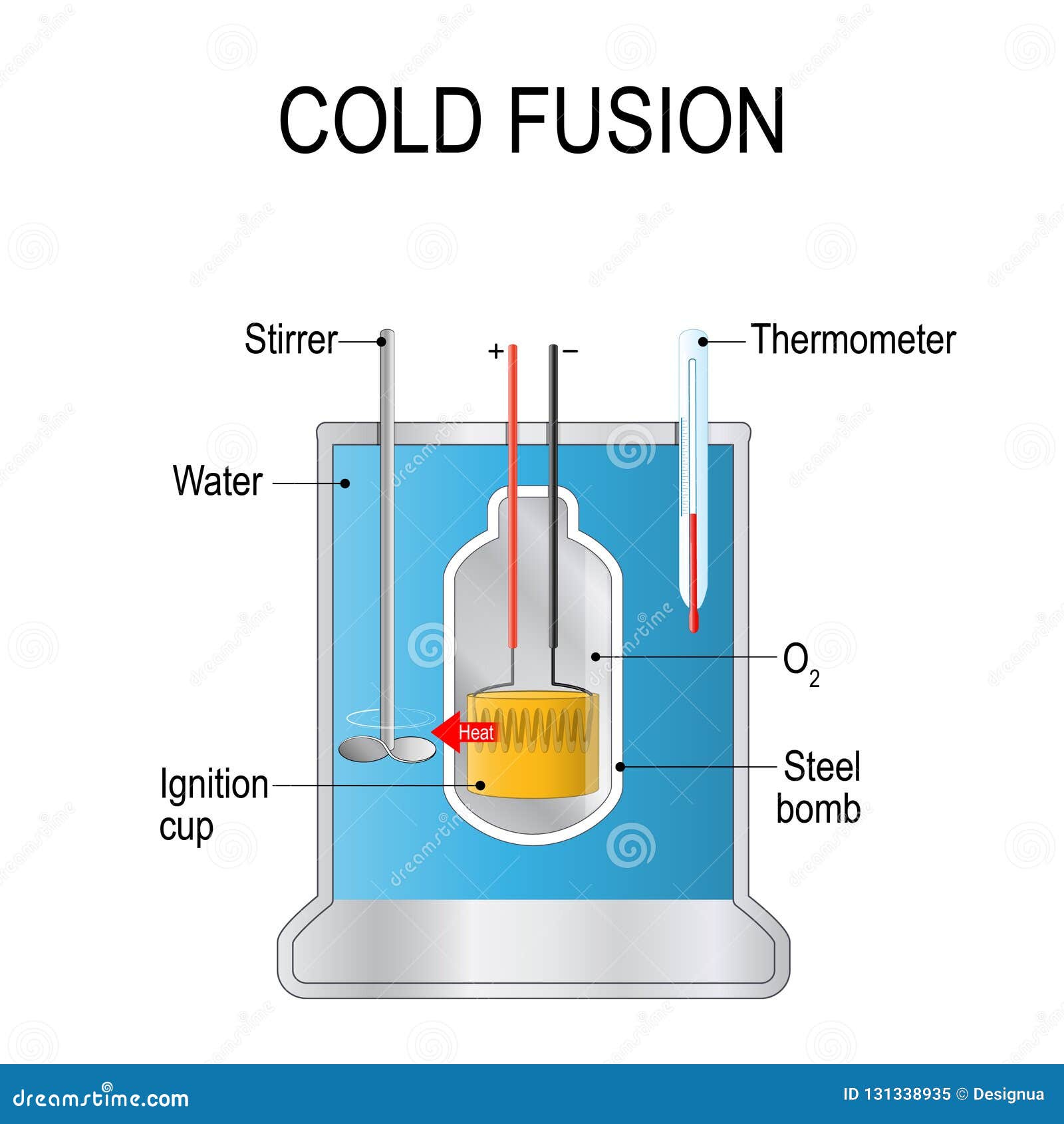
Imagine a world powered by an inexhaustible, clean energy source, derived from simple elements, and requiring no superheated plasmas or colossal magnetic fields. This is the tantalizing promise of cold fusion, a concept that has captivated and confounded the scientific community for decades. Unlike its 'hot' counterpart, which seeks to harness the power of the sun by fusing atomic nuclei at millions of degrees Celsius, cold fusion hypothesizes a nuclear reaction occurring at or near room temperature. It's an idea that, if proven true, would revolutionize our energy landscape, but one that remains shrouded in controversy and scientific skepticism.

The story of cold fusion truly began in March 1989, with electrochemists Martin Fleischmann and Stanley Pons. They announced they had achieved nuclear fusion in a tabletop experiment using a palladium electrode submerged in heavy water, apparently releasing excess heat that couldn't be explained by chemical reactions. The news sent shockwaves through the scientific world, promising a cheap and abundant energy source. However, the initial euphoria quickly gave way to widespread disbelief as other laboratories struggled to replicate their results consistently. Accusations of flawed methodology and even scientific misconduct tarnished the field, leading most mainstream scientists to dismiss cold fusion, often rebranded as 'Low Energy Nuclear Reactions' (LENR), as pseudoscience.

Despite the mainstream rejection, a small but dedicated community of researchers has continued to explore LENR. They argue that the initial failures were due to the extreme difficulty of the experiments and a lack of understanding of the underlying mechanisms, rather than an absence of the phenomenon itself. Modern research has moved beyond the simple Fleischmann-Pons setup, exploring new materials and theoretical models to explain how nuclei might overcome their natural electrostatic repulsion (the 'Coulomb barrier') at low energies. While no definitive, reproducible, and undeniable proof has emerged to satisfy the broader scientific community, these persistent researchers continue to report anomalous heat production and even evidence of nuclear transmutations in their specialized experiments.

The implications of a validated cold fusion technology are nothing short of profound. It could offer a virtually limitless, carbon-free energy source, rendering fossil fuels obsolete and mitigating climate change. It might also lead to novel methods of waste remediation and even advanced materials science. However, the path forward for cold fusion remains fraught with challenges. The burden of proof rests heavily on its proponents to provide rigorous, peer-reviewed, and independently reproducible evidence. Until such a breakthrough occurs, cold fusion remains an intriguing scientific enigma, a testament to humanity's enduring quest for clean energy, and a cautionary tale about the complexities of scientific discovery and validation.